
The Truth for Busy Dads Who Want Results Without Burning Out
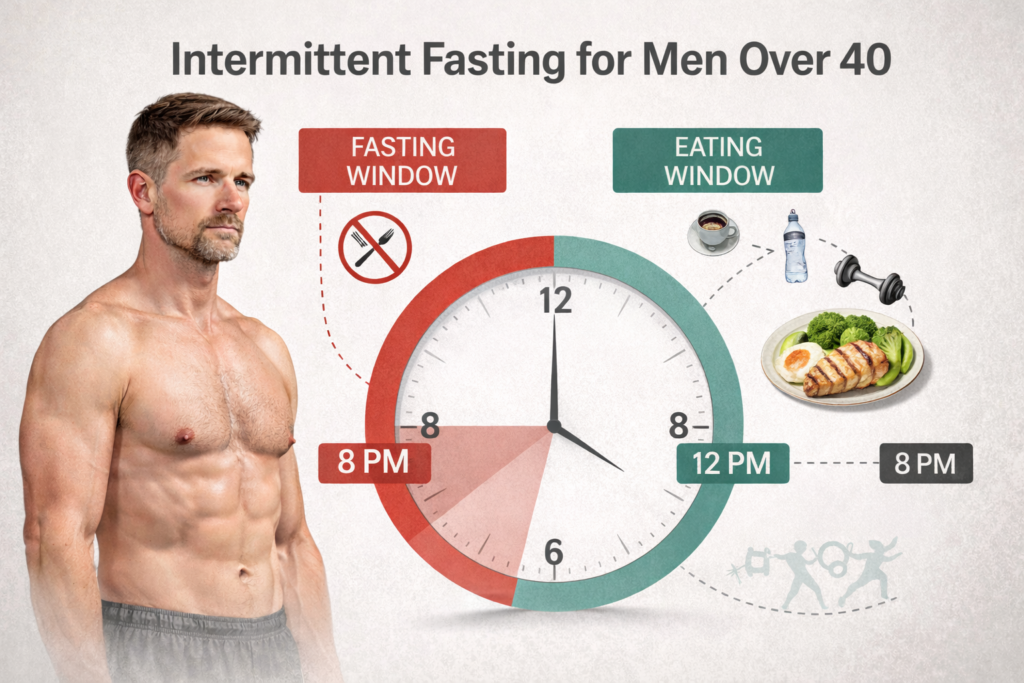
Intermittent fasting sounds powerful.
Skip breakfast.
Drink coffee.
Shrink your waist.
Unlock some ancient warrior metabolism.
But after 40?
Your body is not operating on 25-year-old settings anymore.
So the real question is not:
“Does intermittent fasting work?”
The real question is:
“Is it smart for a 40+ father trying to build strength, lose fat, and maintain hormones?”
Let’s break it down intelligently.
What Is Intermittent Fasting?
Intermittent fasting (IF) is an eating schedule.
You cycle between:
- Eating window
- Fasting window
Common versions:
16:8
Fast 16 hours, eat within 8 hours.
14:10
Fast 14 hours, eat within 10 hours.
24-hour fast once per week.
It is not a diet.
It’s a timing strategy.
Why It Can Work After 40
Intermittent fasting can help because:
1. It Reduces Calories Automatically
If you eat within 8 hours instead of 14, you often consume fewer calories.
Less snacking.
Less mindless eating.
Less late-night damage.
And fat loss ultimately comes down to calorie balance.
2. It Improves Insulin Sensitivity
As men age, insulin sensitivity declines.
Fasting periods may improve how your body handles blood sugar.
Better insulin sensitivity:
- Less fat storage
- Better energy
- Improved metabolic health
3. It Simplifies Life
Busy dads don’t always need more rules.
Sometimes fewer meals equals:
- Less decision fatigue
- Better adherence
- More consistency
Consistency beats complexity.
Where It Can Backfire After 40
Here’s where things get real.
After 40, recovery and hormones matter more.
Intermittent fasting done incorrectly can:
- Increase cortisol
- Reduce testosterone
- Reduce muscle retention
- Cause overeating later
Let’s examine why.
1. Training Fasted Can Raise Stress Hormones
If you lift heavy after 14–16 hours of fasting, especially under work stress, cortisol spikes.
High cortisol over time:
- Increases belly fat
- Suppresses testosterone
- Impairs recovery
For some men, fasted training works.
For others, it drains them.
Pay attention to your energy.
2. Low Protein Intake Is a Common Mistake
When eating windows shrink, protein intake often drops.
After 40, muscle preservation is critical.
If you fast and under-eat protein:
You lose muscle along with fat.
That slows metabolism long-term.
Your goal is fat loss with strength retention.
3. Overeating During Eating Window
Many men fast all day, then eat:
- Huge dinners
- Extra snacks
- Alcohol
That defeats the purpose.
Fasting is not a license to binge.
When Intermittent Fasting Works Well After 40
IF can be effective if:
- You are moderately overweight
- You struggle with late-night eating
- You prefer fewer meals
- You can still hit protein targets
- Your workouts feel strong
A simple version that works for many dads:
12–14 hour overnight fast.
Finish dinner at 7:30pm.
Eat breakfast at 9:00am.
That’s it.
You don’t need extreme 18-hour fasts to see results.
When You Should Be Careful
Avoid aggressive fasting if:
- You already have low energy
- Your sleep is poor
- Your testosterone is borderline low
- You’re lifting intensely 4+ times per week
- You feel irritable and foggy while fasting
Fat loss should improve energy.
Not drain it.
Muscle Preservation Is Priority #1 After 40
Here’s the golden rule:
After 40, muscle is more valuable than aggressive fat loss.
Why?
Muscle:
- Supports testosterone
- Improves insulin sensitivity
- Raises metabolism
- Protects joints
If fasting interferes with muscle retention, it’s not worth it.
The Smart Way to Try Intermittent Fasting After 40
If you want to experiment:
Start simple.
Option 1: 14:10 schedule
Option 2: Skip late-night snacking
Option 3: Keep breakfast light but protein-focused
Rules:
- Lift 3–4 times per week
- Eat 0.7–0.8g protein per pound bodyweight
- Keep calorie deficit moderate
- Sleep 7+ hours
Evaluate after 4 weeks.
If strength improves and waist shrinks, it’s working.
If strength drops and energy crashes, adjust.
Does Fasting Increase Testosterone?
Short answer:
Not directly in any significant way.
Extreme fasting may temporarily increase certain hormone pulses, but chronic calorie restriction lowers testosterone.
Hormones prefer balance.
Aggressive dieting often lowers total testosterone.
Moderate, sustainable fat loss improves it.
The Real Answer: Good or Bad?
Intermittent fasting after 40 is:
Good — if it improves adherence and supports fat loss without harming strength.
Bad — if it increases stress, reduces protein intake, or compromises recovery.
It is a tool.
Not a magic solution.
A Better Question to Ask
Instead of asking:
“Should I fast?”
Ask:
“Can I maintain muscle, strength, and energy while doing this?”
If yes, continue.
If no, adjust.
Your body after 40 rewards intelligence, not extremes.
The Bottom Line for Fit Fathers
You don’t need extreme fasting.
You need:
- Strength training
- High protein intake
- Moderate calorie control
- Good sleep
- Stress management
If intermittent fasting helps you stay consistent, use it.
If it complicates things, skip it.
Fat loss is about habits.
Not heroics.
Strength. Health. Legacy.
And smart decisions that compound over decades.