
The Smart Dad’s Guide to Energy, Strength, and Longevity
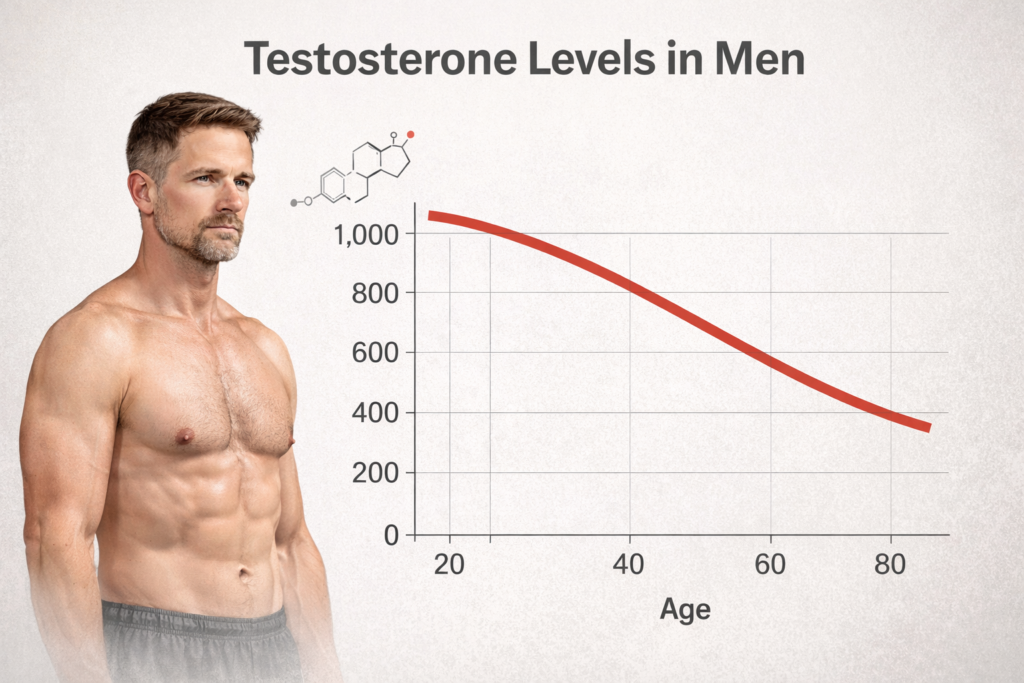
Let’s talk about something most men think about… but rarely talk about.
Energy feels lower.
Workouts feel harder.
Recovery takes longer.
Belly fat shows up uninvited.
And somewhere in the back of your mind, you wonder:
“Is this just aging… or is my testosterone dropping?”
Here’s the reality.
Testosterone naturally declines about 1% per year after age 30.
By the time you hit 40+, that decline becomes noticeable.
But here’s the powerful part:
Low testosterone is not a life sentence.
For many men, lifestyle plays a bigger role than age itself.
Before jumping to prescriptions or panic, let’s build the foundation the intelligent way.
What Testosterone Actually Does
Testosterone isn’t just about muscle or libido.
It influences:
- Muscle mass
- Fat distribution
- Energy levels
- Mood and confidence
- Bone density
- Recovery
- Motivation
When levels drop too low, men often experience:
- Increased belly fat
- Lower strength
- Brain fog
- Irritability
- Reduced drive
- Poor sleep
Notice something?
Almost every symptom overlaps with poor lifestyle habits.
That’s where we start.
Step 1: Lift Heavy (But Smart)
Strength training is the most powerful natural testosterone booster.
Compound movements trigger hormonal response:
- Squats
- Deadlifts
- Bench presses
- Rows
- Lunges
Why it works:
Large muscle groups under tension signal the body to produce more anabolic hormones.
But here’s the key:
Overtraining crushes testosterone.
Train 3–4 times per week.
45–60 minutes.
Progress gradually.
You’re building, not breaking.
Step 2: Sleep Like It’s a Performance Tool
Testosterone is primarily produced during deep sleep.
Sleep 5 hours per night and levels can drop significantly within a week.
Target:
7–8 hours minimum.
To improve sleep quality:
- Dark room
- No screens 60 minutes before bed
- Consistent sleep schedule
- Magnesium before bed
- Cool room temperature
Sleep is free hormone optimization.
Most men ignore it.
Step 3: Reduce Belly Fat
This one is critical.
Excess abdominal fat increases aromatase activity.
Aromatase converts testosterone into estrogen.
More belly fat = lower usable testosterone.
You don’t need to get shredded.
But reducing waist circumference improves hormone balance dramatically.
Remember:
Fat loss improves testosterone.
Testosterone improves fat loss.
It’s a positive feedback loop once you start.
Step 4: Eat Enough Healthy Fats
Testosterone is built from cholesterol.
Low-fat crash diets can reduce hormone production.
Include:
- Whole eggs
- Avocados
- Olive oil
- Nuts
- Fatty fish
Aim for 25–35% of total calories from fats.
This isn’t a keto pitch.
It’s hormonal biology.
Step 5: Optimize Vitamin D
Vitamin D acts like a hormone in the body.
Low vitamin D is linked to low testosterone.
Get sunlight daily if possible.
Or supplement (after testing levels).
Most men working indoor careers are deficient.
Step 6: Manage Stress Aggressively
Chronic stress increases cortisol.
Cortisol and testosterone have an inverse relationship.
High cortisol suppresses testosterone.
You cannot be in fight-or-flight mode 24/7 and expect optimal hormones.
Stress tools that work:
- Daily walks
- Breathing exercises
- 10-minute quiet time
- Reduced alcohol
- Boundaries around work hours
This isn’t softness.
It’s hormone management.
Step 7: Reduce Alcohol
Alcohol reduces testosterone and increases estrogen.
Even moderate nightly drinking adds up.
If belly fat is stubborn and energy is low, cut alcohol for 30 days.
Most men are shocked at the difference.
Step 8: Maintain Adequate Calories
Extreme calorie restriction lowers testosterone.
If you’re dieting too aggressively:
- Energy crashes
- Libido drops
- Recovery slows
Fat loss after 40 should be moderate.
300–500 calorie deficit maximum.
Hormones prefer stability.
What About Supplements?
Be careful.
Most “test boosters” are expensive caffeine with marketing.
Supplements that may help (after blood work):
- Vitamin D
- Zinc (if deficient)
- Magnesium
- Creatine
Creatine deserves special mention.
It supports strength, recovery, and cognitive function.
It doesn’t directly spike testosterone massively, but it improves the environment for muscle growth.
Which indirectly supports hormone health.
When Should You Get Tested?
If you experience:
- Severe fatigue
- Very low libido
- Depression
- Difficulty gaining muscle despite proper training
Get blood work done.
Check:
- Total testosterone
- Free testosterone
- SHBG
- Vitamin D
- Fasting insulin
Knowledge beats guessing.
The Truth Most Men Miss
Testosterone after 40 isn’t about becoming 25 again.
It’s about becoming optimized.
You don’t need peak athlete levels.
You need functional, strong, sustainable levels.
And for most men, improving:
- Sleep
- Strength training
- Body composition
- Stress management
Restores levels significantly.
No extreme measures required.
The Bigger Picture
Testosterone isn’t just about muscles or masculinity.
It’s about:
- Playing with your kids without exhaustion
- Maintaining confidence
- Protecting bone density
- Staying metabolically healthy
- Aging with strength instead of decline
After 40, every decision compounds.
So does every habit.
The Simple Formula
Lift 3–4x per week
Sleep 7–8 hours
Reduce belly fat
Eat healthy fats
Minimize alcohol
Manage stress
Do this for 12 weeks consistently.
Then evaluate.
You may be surprised how powerful disciplined basics are.
Strength. Health. Legacy.
And hormones that work with you, not against you. 💪